Everyone Has an AI Agent Demo. Almost Nobody Has an AI Agent Platform
The jump from a working prototype to a production grade AI agent is bigger than most teams realize. Here is what it actually takes to close that gap.


In the previous post we covered the fastest way to turn ideas into AI agents using the Composer. You can describe what you want to build in plain language, test it immediately and iterate in one place.
Once you have that first version working, the next question is not whether it can pull off a clean demo. The question is whether it can run every day with real users, real data and real risk. That is where the reality of production hits hard. Monitoring that agent in the wild, detecting its weak points and ensuring it operates securely and reliably over time is an entirely different challenge.
When stakeholders start asking the difficult questions: who has access to the underlying data? How do we stop the agent from taking unapproved actions? Where is the audit trail? The conversation quickly shifts from capability to control, security and accountability.
Over the past couple of years, we have worked with many companies trying to move their agents into production. We keep seeing the same pattern. Building the core behavior is hard enough, but the first problems often appear in the configuration around the agent: how it connects to data, which tools it can call, what permissions it has, what requires approval, which guardrails run and what gets logged. These issues quickly become a distraction from the core product and start slowing down progress. Security, permissions, human-in-the-loop controls, guardrails and auditability are often patched together or missing entirely. Without a proper foundation, fixing problems and safely launching new iterations becomes increasingly painful. We built xMagic to solve this exact problem.
The gap between demo and production
We hear this story all the time. An engineering team builds an internal agent to look up customer records, summarize support tickets and draft responses. It works perfectly for the people who built it. Then the reality of a production environment sets in and stakeholders start asking:
When an agent runs code or touches files, is each session isolated to prevent any cross-user data exposure?
What happens if the agent makes up a fact? What safety checks are in place to stop it from sending wrong or harmful information?
If the agent has access to our systems, how do we ensure a human reviews critical actions before it executes them?
If something goes wrong, is there a complete audit trail to see exactly what the agent did?
The room usually goes quiet because none of these things were part of the initial prototype.
This is not the fault of the engineering team. It is a structural issue. Most of the frameworks available today are fantastic for prototyping. However they lack the operational, safety and security layers that companies need before letting any system touch real data.
What a real production platform needs
We like to think about this in prioritized layers from keeping your data secure to empowering you to continuously improve your agents. To make it work in the real world you need several pieces in place.
Your cloud, your data
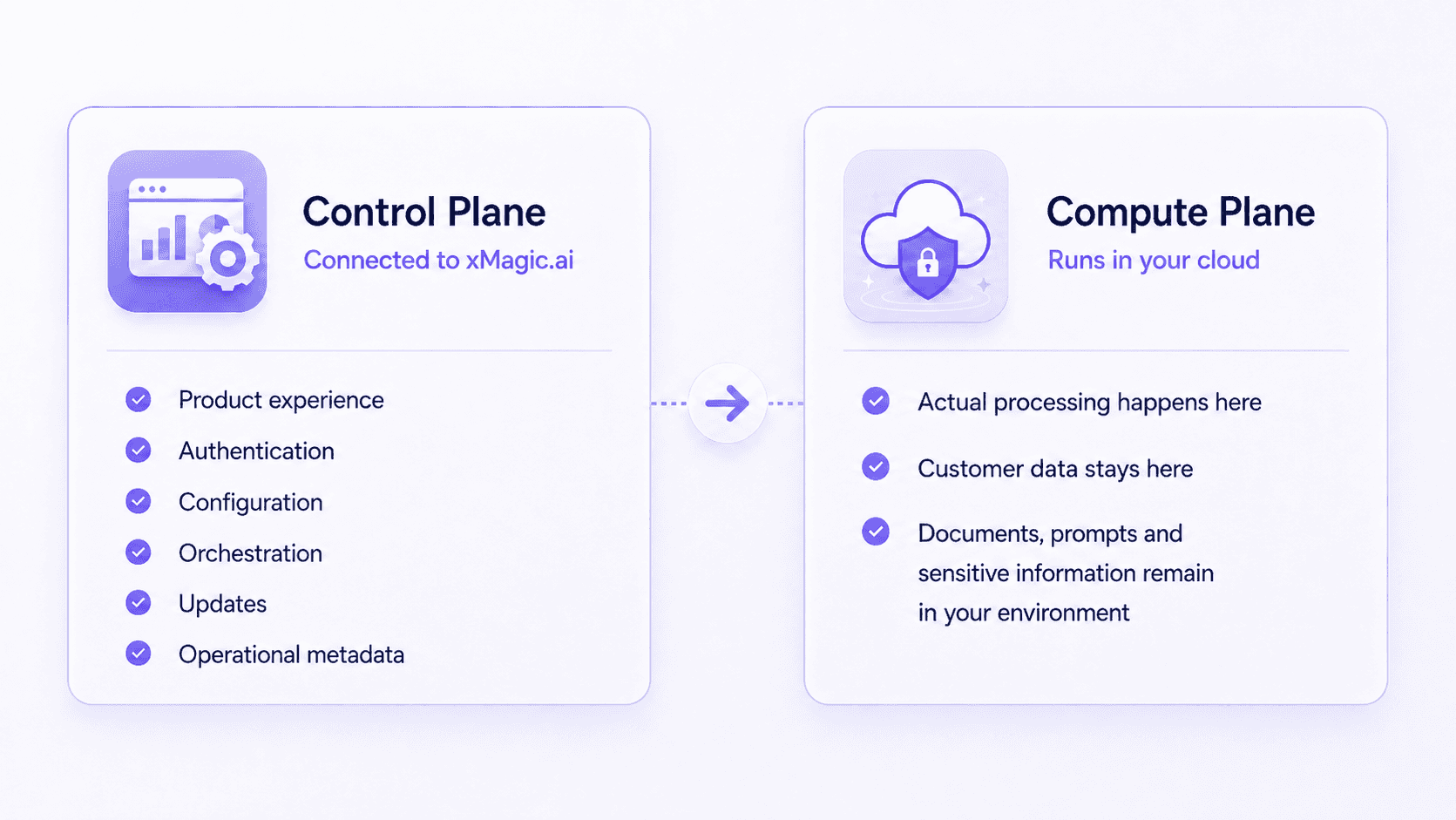
Data residency is often one of the biggest blockers for adopting AI. We constantly hear companies in regulated industries say they simply cannot send their data to external servers.
This is why xMagic uses a hybrid architecture. We run a lightweight control plane that stores basic metadata like usage metrics and configuration settings. Meanwhile your actual data, documents, conversations and processing loads stay securely in your own cloud environment running on your own resources.
You get all the benefits of platform updates and improvements without ever having to send sensitive information outside your perimeter.
Compliance as a foundation
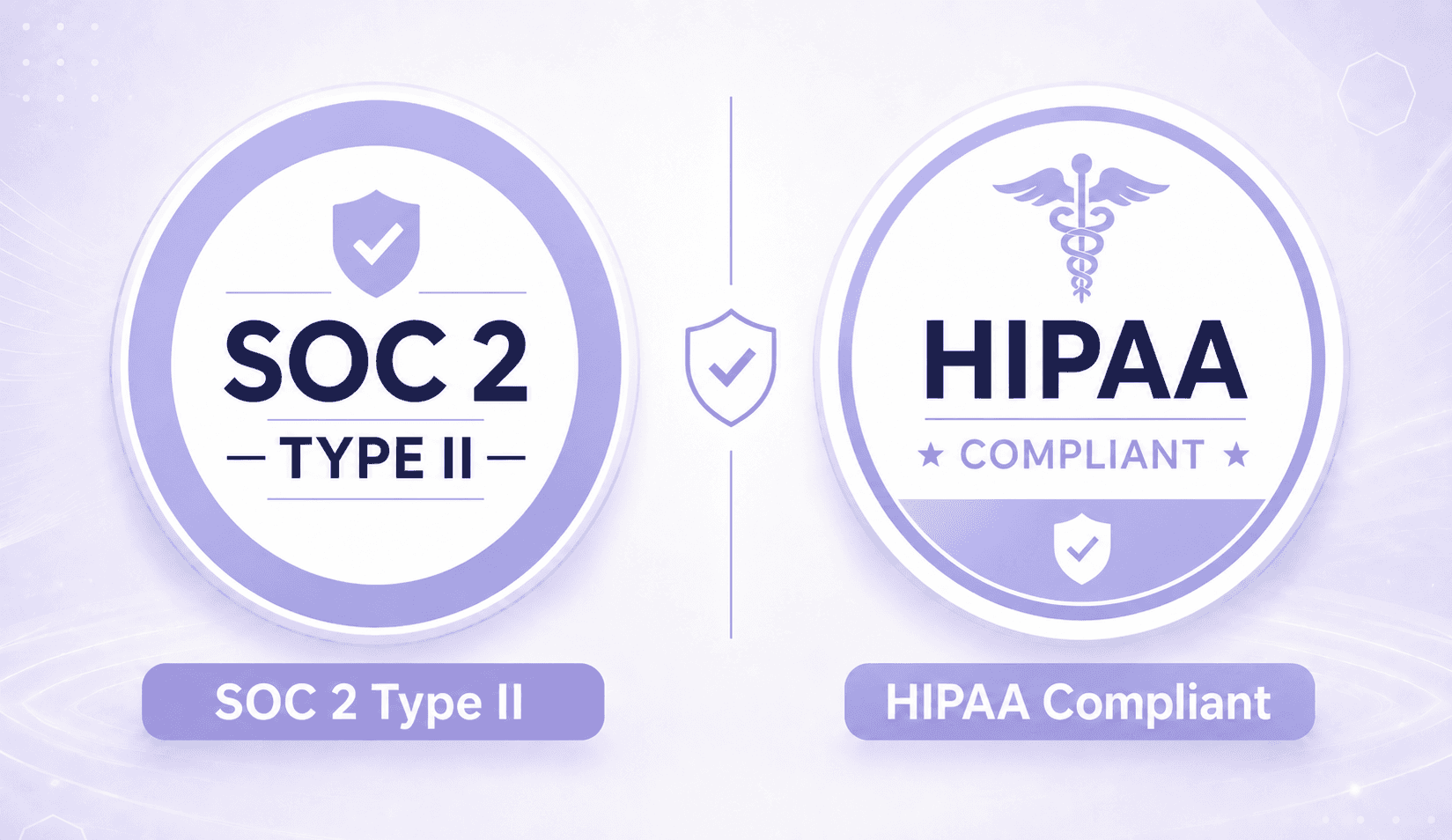
We hold SOC 2 Type II and HIPAA certifications as part of our commitment to maintaining the highest standards of security, privacy and compliance. These standards are essential for the companies we work with, particularly when handling sensitive data, and they are built into the way we design and operate our platform. You can find more details in our public trust center: stochastic.secureframetrust.com
Secure and isolated execution
When agents need to run code, access files or execute shell commands xMagic isolates that execution inside a dedicated container for every single chat session. This guarantees that one user will never have access to another user’s data.
This is not an optional safeguard. We believe it is the minimum standard required to safely run agents that handle sensitive business data.
Identity and access control
This goes beyond simply knowing who can log in. You need fine-grained, role-based access control over what each person can do at every level. xMagic supports Single Sign-On and detailed permissions for admins and members, making it easy to assign the right level of access based on each user’s role.
Instead of a single admin switch you can enable or disable specific privileges such as:
Create new agents
Share agents outside the workspace
View shared workspace agents
View private agents, configurations and folders
Update or delete private agents, configurations and folders
View, edit or create folders
It might sound like a boring administrative detail. But it becomes incredibly important when you are managing dozens of agents across multiple departments and someone accidentally updates a live agent with an untested prompt in the middle of the night.
Input and output guardrails
Before a user message is processed by your main task agent it goes through a set of guardrails you can configure. Think of this as your first line of defense. For example you can configure the system to detect and reject prompt injection attempts. You can also prevent users from asking off topic questions about competitors or block unprofessional language before it distracts your agent and wastes computing power.
The response from the agent then goes through a second layer of checks before the user ever sees it. You can verify if the answer aligns with company guidelines, check if it accidentally exposes internal system names or make sure the tone remains polite and helpful. You set the definition for what is acceptable and the platform enforces those rules automatically.
Human in the loop for critical actions
This is where things get interesting. Suppose you connect your agent to some internal company folders. The agent can read documents, summarize them and generate new ones which is great. But you probably do not want it arbitrarily deleting files or overwriting shared documents.
In xMagic human in the loop is already built in for critical actions such as deleting a file or overwriting a shared document. You can enable or disable this layer. It is designed to cover the most sensitive actions out of the box.
When approvals are enabled the agent will pause before a critical action and ask for human confirmation. That keeps automation moving fast while still preventing irreversible surprises.
Observability and auditability
Every single text and phone conversation is recorded into a threads section. Administrators can review these at any time. Every action the agent takes, every tool it calls and every decision it makes is fully logged and accessible.
When your compliance team asks what the agent did with a specific customer record on a given day you will have a complete answer. You will have a full clear auditable trace instead of having to guess from partial logs.
Continuous iteration
This level of observability does not just give you security. It gives you the foundation to actually improve your agents. Because every action is logged you can easily spot weak points where the agent struggles or makes mistakes. This is the heart of building an effective AI system. You observe the breakdowns and you adjust.
Once you identify a problem our platform allows you to quickly create a new version of the agent, test it safely, deploy it to production and measure the improved results. This creates a tight feedback loop where your AI keeps getting smarter and more reliable over time without breaking existing workflows.
Versioning and safe deployment
To support this continuous iteration cycle every agent and subagent configuration in xMagic is versioned automatically. This means you can play around with a new version, test it and make changes without breaking the one that is currently live.
When you feel confident that the iterated version solves the problem you simply deploy the new version. If something goes wrong you can easily roll back to the previous state. Software engineering figured out this deployment pattern decades ago. It feels strange that so many AI tools still do not offer this basic capability.
Bring your data from where it lives
A lot of companies already keep their documents in SharePoint or Google Drive so we do not expect you to abandon those platforms. xMagic integrates directly with them. We sync your files into the platform so agents can read, reference and work with them. Your primary source of truth stays exactly where it is and we keep everything synchronized for the agents to use.
The bottom line
If you are evaluating different AI agent solutions you should ask yourself a few questions. Could this system run safely in production tomorrow? Can it handle real users, real data and strict compliance requirements? Or is it really just a very polished demo?
Building the demo is the easy part. Having a solid platform underneath is what makes it a real product.
Getting an agent working is no longer the hard part. Operating it safely, reliably and at scale inside a large organization is the actual challenge. That is exactly what we built xMagic to solve.
Ready to go beyond the demo?
See how xMagic gives your team the platform layer to run AI agents in production with the security, control and auditability your organization demands.